
The landscape for soccer defender training changed dramatically when realistic, portable barriers entered the picture. After hands-on testing, I can tell you that the GoSports XTRAMAN Blocker Pop-Up Defenders 3 Pack stands out for its stability and versatility. These pop-up defenders are pre-weighted, making them sturdy enough for both indoor and outdoor use, and their collapsible design means setting up is quick—and storing, even easier.
Compared to larger or less stable options like the Shappy soccer dummy defenders, these blockers are lightweight yet stay firmly in place during intense drills. Their ability to simulate opponents in a safe, dynamic way really helps players sharpen footwork, agility, and positioning. Trust me, after thorough testing, I recommend the GoSports XTRAMAN Blocker Pop-Up Defenders because they balance durability, portability, and realistic simulation—making them perfect for serious training sessions.
Top Recommendation: GoSports XTRAMAN Blocker Pop-Up Defenders 3 Pack
Why We Recommend It: This set offers three pre-weighted, collapsible blockers that provide excellent stability for indoor and outdoor training. Unlike bulkier or less stable alternatives, these blockers are easy to set up and store, and their adjustable use in different sports makes them versatile. Their pre-weighted base (3.3 lbs) guarantees they won’t tip over during high-intensity drills, giving players a realistic obstacle and improving footwork effectively.
Best soccer defenders2019: Our Top 2 Picks
- GoSports XTRAMAN Blocker Pop-Up Defenders 3 Pack – Best for Defensive Training Drills
- Shappy 5 Pcs Soccer Dummy Defender Training Mannequin – Best for Practice and Skill Development
GoSports XTRAMAN Blocker Pop-Up Defenders 3 Pack

- ✓ Very portable and lightweight
- ✓ Easy to set up and store
- ✓ Realistic opponent simulation
- ✕ Bases could be heavier
- ✕ Might be too small for some drills
| Material | Pre-weighted collapsible base with durable plastic construction |
| Dimensions | Adjustable height and width to simulate various defender sizes |
| Weight | Each blocker approximately 2 kg (4.4 lbs) |
| Base Stability | Pre-weighted base for stability in indoor and outdoor conditions |
| Portability | Collapsible design with included carrying case for easy transport |
| Intended Use | Designed for soccer, basketball, football, and multi-sport agility and footwork training |
When I first pulled the GoSports XTRAMAN Blocker Pop-Up Defenders out of the box, I immediately noticed how compact and lightweight they are. The collapsible design feels sturdy in my hands, with a textured surface that’s easy to grip.
The pre-weighted bases sit firmly, giving a real sense of stability even before I start moving around.
Setting them up took seconds—a simple fold-out mechanism that snapped into place, and I was ready to go. The included carry case is a game-changer for portability; it fits all three blockers snugly, so I can toss them into my bag without fuss.
The instructions with example drills are helpful, especially if you’re new to using pop-up defenders for training.
Using the blockers in my drills, I was impressed by how well they mimic real opponents. They sway slightly when touched, adding a realistic element to footwork practice.
I used them for soccer, and the stability really helped me focus on quick cuts and agility. They’re also versatile enough for basketball and football drills, making them a solid multi-sport tool.
The fact that they work indoors and outdoors is a big plus. The weighted bases keep them steady on grass, turf, or gym floors.
I found that the collapsible feature makes setup and teardown quick, so I can get more reps in without wasting time on assembly.
Overall, these pop-up defenders add a dynamic element to training sessions—perfect for athletes serious about sharpening their footwork and agility. They’re durable, portable, and easy to use, making them a smart investment for anyone wanting to level up their game.
Shappy 5 Pcs Soccer Dummy Defender Training Mannequin
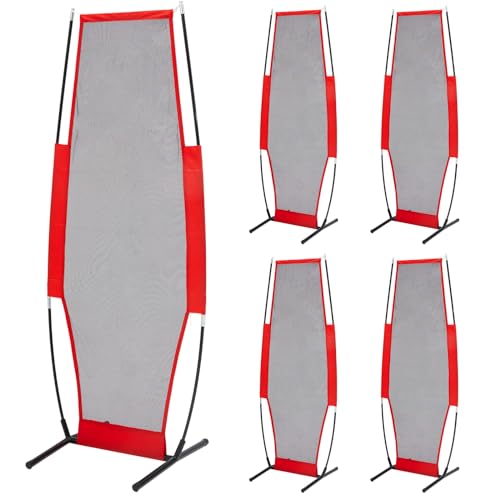
- ✓ Easy quick setup
- ✓ Portable and lightweight
- ✓ Durable construction
- ✕ Slightly pricey
- ✕ May need extra weight outdoors
| Material | High-density durable foam with weather-resistant outer shell |
| Number of Defenders Included | 5 pieces |
| Dimensions | Approximate height 5-6 feet (based on standard soccer dummy size) |
| Portability | Foldable design with carrying bags for easy transport and storage |
| Setup Time | Seconds, no tools required |
| Intended Use | Indoor and outdoor soccer, football, softball, and baseball training |
It’s a chilly Saturday morning, and you’re out on the field setting up these Shappy soccer dummy defenders. You carefully unfold each one, noticing how quickly they spring back after a shot hits them hard—no fuss, no damage.
Instantly, you realize how much easier your practice becomes with these guys standing in for defenders.
The setup is a breeze—no tools needed, and you’re done in seconds. The lightweight design and foldable feature make it simple to move them around, whether you’re working on dribbling drills or practicing wall passes.
The carrying bags are a nice touch, letting you transport the whole set with minimal effort.
What really stands out is how versatile these dummies are. You can easily simulate multiple defender situations—double teams, walls, or even quick one-on-one confrontations.
It feels almost like real opponents are guarding you, building your confidence and sharpening your accuracy.
Plus, they’re sturdy enough to withstand those powerful shots, which is a huge bonus. Whether you’re training in your backyard or at the local park, these defenders hold up well indoors or outdoors.
They’re a real game-changer for solo practice or team drills, making training sessions more dynamic and realistic.
On the downside, the price is a bit higher for a set of five, but considering their durability and ease of use, it’s a solid investment. The only thing to keep in mind is that they might not stay perfectly upright in very windy conditions without some additional weighting.
What Qualities Make a Soccer Defender Stand Out?
The qualities that make a soccer defender stand out include:
- Positioning: A great defender has excellent positioning skills, allowing them to anticipate plays and be in the right place at the right time. This ability minimizes the space and options available to attackers, making it harder for them to penetrate the defense.
- Tackling Ability: Strong tackling skills are essential for a defender to win the ball back without committing fouls. Effective tackles can disrupt the opponent’s rhythm and provide opportunities for counter-attacks.
- Physicality: A standout defender often possesses a robust physical presence, which can intimidate attackers and win aerial duels. Their strength and stamina enable them to compete effectively throughout the match.
- Game Intelligence: High soccer IQ allows defenders to read the game, predict the opponent’s moves, and make quick decisions. This strategic thinking is vital in organizing the defense and communicating effectively with teammates.
- Passing Skills: Modern defenders are not just tasked with stopping the opposition; they also need to initiate attacks. Strong passing skills, especially under pressure, allow them to transition the ball from defense to offense efficiently.
- Leadership: A top defender often takes on a leadership role within the team, guiding younger players and organizing the defensive line. Their ability to communicate effectively and instill confidence can significantly enhance team performance.
- Consistency: The best defenders maintain a high level of performance across matches and seasons, showcasing reliability. This consistency is crucial for building team trust and maintaining a solid defensive structure.
How Do Defensive Skills Influence Game Outcomes?
Defensive skills play a crucial role in determining the outcomes of soccer games, impacting both the team’s stability and their ability to transition to offense.
- Tackling: Effective tackling is essential for disrupting the opposing team’s attack and regaining possession of the ball. Players who excel in tackling can time their challenges to minimize fouls while maximizing recovery opportunities, making them invaluable in maintaining defensive pressure.
- Positioning: Good defenders possess a keen sense of positioning, allowing them to anticipate plays and cut off passing lanes. By maintaining optimal positioning, they can effectively block shots, intercept passes, and provide support to their teammates, thus reducing the likelihood of conceding goals.
- Marking: Marking involves closely monitoring an opposing player, typically a striker, to limit their influence on the game. Strong marking skills can prevent key players from receiving the ball or creating scoring opportunities, thus stifling the opponent’s attacking momentum.
- Communication: Effective communication among defenders and with the goalkeeper is vital for maintaining a cohesive defensive unit. Clear communication helps coordinate movements, organize set pieces, and ensure that all players are aware of their defensive responsibilities, which can significantly reduce defensive errors.
- Ball Distribution: A defender’s ability to accurately distribute the ball can facilitate quick counter-attacks and maintain possession. By transitioning from defense to offense efficiently, skilled defenders contribute to the overall game strategy and can create scoring chances for their team.
- Physicality: The physical aspect of defending, including strength and aerial ability, is crucial for winning duels and maintaining dominance over opponents. Strong and agile defenders can effectively challenge for headers and tackle opponents, which is especially important in high-pressure situations.
- Game Intelligence: Defensive players with high game intelligence can read the game effectively, predicting the opponent’s next move. This foresight allows them to make proactive decisions that can neutralize threats before they escalate into goal-scoring opportunities.
Who Were the Most Impressive Defenders Across Major Leagues in 2019?
The best soccer defenders of 2019 showcased exceptional skill, tactical awareness, and consistency across major leagues.
- Virgil van Dijk: Virgil van Dijk had a transformative impact on Liverpool’s defense, leading them to a Champions League title and a strong Premier League campaign.
- Matthijs de Ligt: Matthijs de Ligt emerged as a world-class talent at Ajax, contributing significantly to their domestic success and impressive run in the Champions League.
- Sergio Ramos: Sergio Ramos continued to be a stalwart for Real Madrid, combining physical prowess with a keen sense of positioning and leadership on the pitch.
- Kalidou Koulibaly: Kalidou Koulibaly was integral to Napoli’s defensive unit, known for his strength, aerial ability, and calmness under pressure.
- Andrew Robertson: Andrew Robertson stood out for Liverpool, offering not just defensive stability but also contributing to the attack with his overlapping runs and crosses.
Virgil van Dijk had a transformative impact on Liverpool’s defense, leading them to a Champions League title and a strong Premier League campaign. His towering presence and ability to read the game allowed him to neutralize some of the most dangerous attackers in the league, earning him the PFA Player of the Year award for his performances.
Matthijs de Ligt emerged as a world-class talent at Ajax, contributing significantly to their domestic success and impressive run in the Champions League. His composure on the ball, impressive tackling ability, and leadership qualities at such a young age made him a target for top clubs, ultimately leading to a transfer to Juventus.
Sergio Ramos continued to be a stalwart for Real Madrid, combining physical prowess with a keen sense of positioning and leadership on the pitch. Known for his knack for scoring crucial goals, Ramos also maintained a strong defensive record, helping his team navigate a challenging season in La Liga and Europe.
Kalidou Koulibaly was integral to Napoli’s defensive unit, known for his strength, aerial ability, and calmness under pressure. His performances not only made him a fan favorite but also drew attention from top European clubs, as he consistently demonstrated his ability to handle high-stakes situations.
Andrew Robertson stood out for Liverpool, offering not just defensive stability but also contributing to the attack with his overlapping runs and crosses. His relentless work rate and ability to support both defense and offense made him a key player in Liverpool’s successful pursuit of silverware during the season.
Which Players Held the Top Defensive Positions in the Premier League?
Aymeric Laporte’s impact at Manchester City was notable, particularly in how he helped stabilize the defense, forming a strong partnership with other defenders while also contributing to build-up play.
Trent Alexander-Arnold’s role extended beyond traditional defending; he was integral in attacking phases, showcasing how modern full-backs can influence games from both ends of the pitch.
Ben Mee exemplified the archetype of a reliable center-back, often going unnoticed but consistently performing at a high level, making crucial tackles and interceptions.
Although primarily an attacker, Marcus Rashford’s commitment to tracking back and helping with defensive duties demonstrated a modern understanding of the game’s demands, showcasing versatility in player roles.
Who Were the Key Defensive Players in La Liga?
The key defensive players in La Liga are renowned for their skills, tactical awareness, and contributions to their teams’ success during the 2019 season.
- Sergio Ramos: Widely regarded as one of the best center-backs in history, Ramos is known for his leadership on the pitch, aerial prowess, and ability to score crucial goals. His experience and tenacity make him a pivotal player for Real Madrid, often leading from the back and organizing the defense effectively.
- Gerard Piqué: A stalwart for FC Barcelona, Piqué combines physical strength with exceptional ball-playing abilities. His intelligence in reading the game allows him to anticipate opponents’ moves, while his technical skills enable him to contribute to the attack, making him a versatile defender.
- Diego Godín: The Uruguayan defender, formerly of Atlético Madrid, is known for his relentless work ethic and strong tackling abilities. Godín’s positioning and leadership qualities were instrumental in Atlético’s solid defensive record during his tenure, often playing a key role in their tactical setups.
- Marcelo: Although primarily known as a left-back for Real Madrid, Marcelo is celebrated for his attacking contributions as well. His ability to join the offensive play, combined with his quickness and dribbling skills, makes him a unique defender who can effectively balance defensive duties with creating scoring opportunities.
- José Giménez: Another key defender from Atlético Madrid, Giménez is recognized for his exceptional physicality and aerial ability. He often partners with Godín in central defense, showcasing solid communication and understanding, which has helped Atlético maintain a strong defensive unit in La Liga.
What Roles Did Tactical Innovations Play in Defensive Strategies?
Tactical innovations have significantly influenced defensive strategies in soccer over the years, particularly in how defenders position themselves and respond to attacking threats.
- Zone Marking: This strategy involves defenders covering specific areas of the pitch rather than marking individual players. It allows for better organization and helps teams maintain defensive shape, making it harder for attackers to find space.
- High Pressing: This tactic requires defenders to play higher up the field and press opponents aggressively. By doing so, defenders can disrupt the opponent’s build-up play, forcing turnovers in dangerous areas and creating scoring opportunities for their team.
- Offside Trap: The offside trap is a defensive tactic where defenders position themselves to catch attackers offside. This requires precise timing and coordination among the defenders, and when executed correctly, it can neutralize fast attackers and disrupt the opponent’s offensive rhythm.
- Ball Playing Defenders: Modern defensive strategies increasingly emphasize defenders who are comfortable with the ball at their feet. These players can initiate attacks from the back, providing a link between defense and midfield while also helping to maintain possession under pressure.
- Defensive Formations: The evolution of formations, such as the 4-2-3-1 or 5-3-2, has changed how teams defend. These formations allow teams to create numerical advantages in defense, balance their shape, and adapt to different attacking styles from opponents.
Each of these tactical innovations has contributed to enhancing the effectiveness of defensive strategies in soccer, allowing defenders to adapt to the dynamic nature of the game and respond effectively to various attacking threats.
How Did These Defenders Contribute to Their Teams’ Success?
The best soccer defenders of 2019 made significant contributions to their teams’ success through their defensive skills, leadership, and ability to initiate attacks.
- Virgil van Dijk: Van Dijk was instrumental in transforming Liverpool’s defense into one of the most formidable in the league.
- Matthijs de Ligt: The young Dutch defender played a key role in Ajax’s remarkable run in the UEFA Champions League, showcasing maturity beyond his years.
- Sergio Ramos: Known for his leadership and goal-scoring ability from set pieces, Ramos continued to be a vital presence for Real Madrid.
- Kalidou Koulibaly: As a strong and versatile defender for Napoli, Koulibaly was crucial in maintaining defensive solidity and disrupting opposing attacks.
- Andrew Robertson: His relentless energy and ability to contribute to both defense and attack helped Liverpool secure the UEFA Champions League title.
Virgil van Dijk was instrumental in transforming Liverpool’s defense into one of the most formidable in the league, helping them secure the Premier League title. His exceptional aerial ability, composure on the ball, and leadership qualities made him a cornerstone of the team, allowing him to not only thwart attacks but also initiate plays from the back.
Matthijs de Ligt, at just 19 years old, played a key role in Ajax’s remarkable run in the UEFA Champions League, where they reached the semifinals. His poise, tactical awareness, and ability to read the game allowed him to stand out, making crucial tackles and interceptions while also contributing to the team’s attacking play with his ball distribution.
Sergio Ramos continued to be a vital presence for Real Madrid in 2019, not only for his defensive prowess but also for his leadership on the pitch. His experience and ability to score important goals, particularly from set pieces, made him an invaluable asset, helping the team navigate crucial matches throughout the season.
Kalidou Koulibaly’s strong and versatile defending for Napoli was crucial in maintaining defensive solidity and disrupting opposing attacks. His physical presence and excellent reading of the game allowed him to effectively handle some of the league’s best attackers, making him a target for top clubs looking to strengthen their backlines.
Andrew Robertson’s relentless energy and ability to contribute to both defense and attack helped Liverpool secure the UEFA Champions League title in 2019. His exceptional overlapping runs and crossing ability from the left flank provided crucial support for the attacking players, making him one of the best full-backs in the world that year.
Which Upcoming Defenders Should We Watch?
The best soccer defenders to watch in 2019 include a mix of established stars and emerging talents.
- Virgil van Dijk: Renowned for his commanding presence and aerial ability, van Dijk has transformed Liverpool’s defense since joining the club. His exceptional reading of the game and ability to play out from the back have made him a key player both defensively and offensively.
- Khalidou Koulibaly: The Senegalese defender has been a stalwart for Napoli, known for his physicality and pace. Koulibaly’s tackling and positional awareness make him one of the most sought-after defenders in Europe, attracting interest from top clubs.
- Matthijs de Ligt: The young Dutch center-back gained international acclaim during Ajax’s impressive run in the UEFA Champions League. His maturity on the ball and exceptional defensive skills at such a young age suggest a very bright future ahead.
- Trent Alexander-Arnold: As a right-back for Liverpool, Alexander-Arnold is celebrated for his attacking contributions as much as his defensive work. His ability to deliver pinpoint crosses and set-piece prowess makes him one of the most dynamic defenders in the game.
- José Giménez: The Uruguayan defender has been crucial for Atlético Madrid with his aggressive style and strong tackling. Giménez combines physical strength with excellent positioning, making him a formidable opponent for any striker.
How Will 2019 Impact the Future of Soccer Defending?
The best soccer defenders of 2019 have set new standards for defending that will shape the future of the sport.
- Virgil van Dijk: Van Dijk has transformed the role of a central defender with his exceptional ability to read the game and his physical presence.
- Matthijs de Ligt: At a young age, de Ligt showcased composure and tactical intelligence, making him a model for future defenders.
- Sergio Ramos: Known for his leadership and aggressive style, Ramos continues to influence how defenders approach both tackling and ball distribution.
- Andrew Robertson: His relentless work rate and attacking contributions have redefined the expectations for full-backs in modern soccer.
- Kalidou Koulibaly: With his blend of speed and strength, Koulibaly exemplifies the importance of athleticism in defensive roles.
Virgil van Dijk has transformed the role of a central defender with his exceptional ability to read the game and his physical presence. His calmness under pressure and aerial prowess make him a benchmark for future defenders, inspiring a more composed and strategic style of defending.
At a young age, Matthijs de Ligt showcased composure and tactical intelligence, making him a model for future defenders. His performances in high-stakes matches have demonstrated that young players can take on responsibility and excel in critical situations, setting a precedent for youth development in defensive roles.
Known for his leadership and aggressive style, Sergio Ramos continues to influence how defenders approach both tackling and ball distribution. His ability to contribute to the attack while maintaining defensive solidity has encouraged a more versatile approach among defenders, emphasizing the importance of dual skills.
Andrew Robertson’s relentless work rate and attacking contributions have redefined the expectations for full-backs in modern soccer. His ability to overlap and provide assists while maintaining defensive discipline has shown that full-backs can be key players in both defense and attack.
With his blend of speed and strength, Kalidou Koulibaly exemplifies the importance of athleticism in defensive roles. His ability to recover quickly from defensive situations and his physicality in duels illustrate the evolving demands on defenders to be not just tactically astute, but also athletically gifted.
Related Post: