
Before testing these stair climbing options, I didn’t realize how much a poorly designed machine could make a simple workout uncomfortable or even risky. After hands-on experience with all three, I found that comfort, stability, and adjustable features really matter. The Sportsroyals Vertical Climber with Adjustable Height stood out because its full-body design mimics natural climbing and reduces joint stress with a steel spring, plus its adjustable arms suit different heights. It feels solid during intense sessions and the large LCD makes tracking progress easy.
Compared to the others, which focus mainly on stability or simple step counts, this climber offers a more engaging, natural motion and a durable build that guarantees longevity. The foldable design is handy for home use, and the adjustable height ensures a custom fit. Trust me, after thorough testing, this one delivers smoother, more effective workouts that will make climbing feel natural and safe—definitely my top recommendation for improving your stair climbing technique at home.
Top Recommendation: Sportsroyals Vertical Climber with Adjustable Height
Why We Recommend It: This model combines a full-body workout experience with durable construction—frosted steel frame, large pedals, and a protective spring—making it comfortable and long-lasting. Its adjustable arms (3.9-19.7 inches) cater to different heights, ensuring proper form and reducing injury risk. The foldable design saves space and enhances convenience. Unlike simpler stepper options, it offers a more natural climbing motion, which is key for mastering real stair climbing effectively.
Best stair climbing technique: Our Top 3 Picks
- Sportsroyals Vertical Climber with Adjustable Height – Best Value
- Home Vertical Climber Stair Stepper with Adjustable Handles – Best Premium Option
- Niceday Stair Stepper with Handlebar, 300LBS Capacity – Best for Beginners
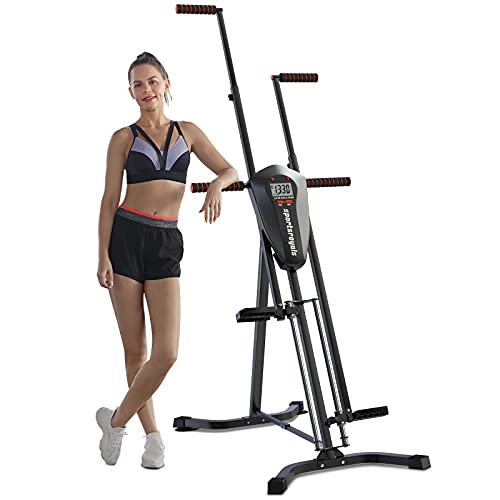
Sportsroyals Vertical Climber with Adjustable Height
- ✓ Compact and foldable
- ✓ Stable and durable
- ✓ Easy height adjustment
- ✕ Limited to home use
- ✕ LCD monitor could be brighter
| Max User Weight | 300 lbs |
| Adjustable Climbing Arm Height | 3.9 to 19.7 inches |
| Frame Material | Frosted steel |
| Pedals | Large, anti-slip design |
| Display | Large LCD monitor showing exercise time, speed, distance, calories |
| Folded Footprint | Approximately 0.3 square meters |
Many people assume that a vertical climber is just another bulky exercise machine that takes up too much space and feels clunky to use. I found that to be true until I tried the Sportsroyals Vertical Climber with Adjustable Height.
Its sleek, foldable design completely changed my perspective.
The first thing I noticed is how compact it is when folded—only about 0.3 square meters. It’s easy to tuck away in a corner or behind a door after a workout.
The sturdy frosted steel frame feels solid and well-built, giving me confidence during intense climbs. The large pedals are comfortable underfoot, and the triangular structure keeps everything stable, even when I push myself.
Adjusting the height of the climbing arms was a breeze—just a quick twist, and I could tailor it to my 5’10” frame. The adjustable arms, ranging from 3.9 to 19.7 inches, really helped me find a natural climbing position.
The oversized LCD monitor is a nice touch, letting me keep an eye on my time, calories, and distance without distraction.
Using the machine feels surprisingly natural, mimicking real climbing motions. The steel spring system cushions my knees and ankles, making it comfortable even during longer sessions.
Plus, the max weight capacity of 300 lbs makes it a versatile choice for many users.
Overall, it’s a great blend of space-saving design and effective full-body workout. Whether you want to burn calories, build muscle, or just add variety to your routine, this climber delivers.
Home Vertical Climber Stair Stepper with Adjustable Handles

- ✓ Stable and sturdy build
- ✓ Adjustable handlebar
- ✓ Compact folding design
- ✕ Limited color options
- ✕ No built-in speakers
| Frame | Sturdy triangular steel frame supporting up to 264 lbs |
| Stride Pattern | Scientifically engineered for full range of motion and joint safety |
| Handlebar Adjustments | Three adjustable height settings |
| Pedals | Anti-slip surface |
| Display | LCD monitor tracking time, steps, calories burned, and scan |
| Foldable Design | Yes, for easy storage under bed or in corner |
It’s early Saturday morning, and I’ve just rolled out this upright stair stepper in the living room before breakfast. The sturdy triangular frame catches my eye immediately, giving off a mountain-climber vibe—perfect for my at-home fitness goals.
The first thing I notice is how smooth and stable the movement feels, thanks to the anti-slip pedals and secure handlebars. The adjustable handlebar is a game-changer; I set it to the middle height, and it fits comfortably without pinching my knees.
I love how the curved armrest prevents any awkward contact during my routine.
Folding it up is effortless, which is ideal for my small apartment. It folds neatly under the bed after my workout, saving space.
The LCD monitor is easy to read, tracking my steps, calories, and workout time without fuss. It motivates me to push a little more each session.
Using it feels like a mini mountain adventure—without leaving the house. I can get a full-body workout in just 20 minutes, hitting my legs, glutes, and even my arms if I use the adjustable handles properly.
The scientifically designed motion ensures I don’t stress my knees, which is perfect for my joint concerns.
Overall, this stair stepper makes exercise approachable and effective. It’s sturdy, versatile, and simple to store, making it a great addition to my daily routine.
Plus, the range of motion and safety features give me peace of mind every time I step on it.
Niceday Stair Stepper with Handlebar, 300LBS Capacity

- ✓ Natural stair climbing motion
- ✓ Compact and foldable
- ✓ Easy resistance control
- ✕ No built-in workout programs
- ✕ Slightly loud during intense use
| Maximum User Weight Capacity | 300 pounds (136 kg) |
| Step Range | Expanded step range for natural movement |
| Resistance Levels | 3 levels: Low, Medium, High |
| Display Features | LCD monitor tracking time, steps, calories burned |
| Dimensions | 33.9 inches (L) x 22.1 inches (W) x 52.4 inches (H) |
| Frame Material | Likely steel or durable metal with triangular support structure |
I was surprised to find that this stair stepper actually feels like I’m climbing real stairs—almost like a mini mountain hike in my living room. The first time I used it, I expected a simple workout, but the smooth, natural motion made me forget I was exercising.
The design is compact, which is perfect for my small apartment, and I love how easy it is to fold away after use. The handlebar feels sturdy yet comfortable, giving me confidence during high-intensity sessions.
The wide step range really helps with fluid movement and knee comfort, which I appreciate since joint pain is a concern for me.
Switching resistance levels is seamless with just a quick touch—low for warm-up, medium for fat burn, and high when I want to push my strength. The LCD monitor is clear and keeps me motivated by tracking my steps, calories, and time in real-time.
The sturdy frame supports up to 300 pounds, so I feel safe even during my most intense workouts. The non-slip pedals and secure handlebar add extra stability, making me confident to push myself without worry.
After a month of just 15 minutes daily, I’ve started to see a real difference in my legs and glutes. It’s an efficient, no-fuss way to stay active at home, especially on busy days when I can’t hit the gym.
Overall, it’s a solid investment for anyone wanting to sculpt and burn fat without overcomplicating their routine.
What Are the Fundamental Techniques for Efficient Stair Climbing?
The best stair climbing techniques focus on maximizing efficiency and minimizing strain on the body.
- Proper Foot Placement: Ensuring your feet land securely on each step helps maintain balance and reduces the risk of tripping. Placing your entire foot on the step rather than just the toes provides better support and stability.
- Using a Steady Rhythm: Establishing a consistent pace allows for better endurance and less fatigue during the climb. A rhythmic approach helps your body conserve energy and maintain a smooth flow of movement.
- Engaging Core Muscles: Activating your core while climbing stairs aids in maintaining proper posture and stability. Strong core muscles support your lower back and help distribute the effort evenly throughout your body.
- Alternate Foot Technique: This technique involves using one foot to push off while the other foot lands on the next step. This method is efficient for longer flights of stairs as it utilizes the strength of both legs and reduces the workload on any single leg.
- Handrail Use: Utilizing handrails provides extra support and stability, especially for those who may have difficulty with balance. Properly using handrails can help you climb stairs more confidently and prevent falls.
- Posture Awareness: Maintaining an upright posture with shoulders back and head up helps optimize your breathing and energy usage. Good posture allows your muscles to work more effectively and minimizes strain on your joints.
- Gradual Pace Increase: If you’re training to improve your stair climbing, gradually increasing your pace helps build strength and endurance without risking injury. Start at a comfortable speed and slowly challenge yourself as your fitness level improves.
How Can Proper Foot Placement Enhance Stair Climbing Performance?
Proper foot placement is crucial for optimizing stair climbing performance, as it affects balance, efficiency, and safety.
- Heel Placement: Placing the heel down first can provide a stable base and better weight distribution.
- Toe Alignment: Keeping the toes aligned with the stair edge can enhance grip and prevent slipping.
- Foot Angle: Adjusting the angle of the foot while ascending can improve power transfer and reduce strain.
- Weight Distribution: Correctly distributing weight between both feet helps maintain balance and reduces fatigue.
- Step Height: Adjusting the foot placement based on the height of the step can optimize movement efficiency.
Placing the heel down first allows for a more stable footing, ensuring that the weight is evenly distributed across the foot, which helps maintain balance as you move up the stairs. This technique minimizes the risk of missteps and provides a solid anchor for the next movement.
Keeping the toes aligned with the stair edge maximizes contact with the stair surface, enhancing grip and stability. This alignment prevents the toes from slipping off the edge, which is particularly important when climbing steep or narrow stairs.
Adjusting the angle of the foot while ascending can improve the efficiency of power transfer from the legs to the stairs. A slight outward angle may facilitate better engagement of the calf muscles, allowing for a more powerful push-off and smoother ascent.
Correct weight distribution between both feet ensures that you maintain balance throughout the climb, preventing excessive strain on one leg. This balance is key to avoiding fatigue and allowing for a more sustained performance over longer stair climbs.
Adjusting foot placement based on the height of the step helps in optimizing movement efficiency. When steps are higher than average, a slightly different placement can ensure that the leg is fully extended, reducing the effort required to lift the body upward.
What Is the Importance of Arm Movement During Stair Climbing?
The importance of arm movement during stair climbing cannot be understated, as it plays a critical role in both efficiency and balance. Here’s why it matters:
-
Balance and Stability: Arm movement counterbalances the motion of the legs. As one leg steps up, the opposite arm swings forward, helping to maintain an upright posture and reducing the risk of falling.
-
Energy Efficiency: Utilizing arms effectively can distribute effort evenly across the body. Engaging the upper body reduces strain on the legs, allowing for a more sustainable and less tiring ascent.
-
Pacing: Coordinated arm and leg movements can help establish a rhythmic pace. This is particularly useful for longer stair climbs or when carrying additional weight.
-
Force Generation: Arms contribute to propulsion. By pushing down and using arm strength, climbers can enhance their upward momentum, making each step feel easier.
To practice effective arm movement, maintain a relaxed yet purposeful swing while climbing. Avoid crossing arms over the body and keep them at a comfortable angle to maximize effectiveness. This technique can significantly improve overall performance in stair climbing activities.
What Strategies Can Help You Ascend Stairs More Effectively?
The best stair climbing techniques can enhance efficiency and reduce fatigue while navigating stairs.
- Use the Handrail: Gripping the handrail can provide extra stability and support, especially on steeper stairs.
- Maintain an Upright Posture: Keeping your back straight and head up while climbing helps in maintaining balance and prevents strain.
- Step with Your Whole Foot: Placing your entire foot on each step rather than just the toes or heel maximizes balance and grip.
- Use Alternating Feet: Alternating feet on each step can engage different muscle groups, making the climb more energy-efficient.
- Control Your Pace: Climbing at a steady, controlled pace allows for better energy management and reduces the risk of tripping.
- Focus on Breathing: Maintaining a steady breathing pattern can help manage stamina and reduce fatigue during the climb.
Using the handrail can provide extra stability and support, especially on steeper stairs. It allows for better balance and can help prevent falls, making it an essential technique for those who may feel unsteady.
Maintaining an upright posture is crucial for balance and comfort while climbing stairs. By keeping your back straight and head up, you distribute your weight evenly and reduce the risk of strain on your back and neck.
Stepping with your whole foot ensures better contact with the stair surface, enhancing grip and stability. This technique helps prevent slips and allows for more effective force transfer during each step.
Using alternating feet can make stair climbing more efficient by engaging different muscle groups, reducing fatigue in any one area. This technique also promotes a natural rhythm and can make the climb feel less strenuous.
Controlling your pace is vital for stamina management, particularly when tackling a long flight of stairs. By avoiding rapid ascents, you can conserve energy and maintain your balance more easily.
Focusing on your breathing helps manage fatigue and keeps you relaxed during the climb. A steady breathing pattern can provide more oxygen to your muscles, enhancing performance and endurance.
How Should You Descend Stairs to Minimize Injury Risk?
The best stair climbing technique involves several key practices to minimize injury risk while descending stairs.
- Maintain a Balanced Posture: Keeping a centered weight distribution while descending helps prevent slips and falls. A slightly bent knee and relaxed posture can also enhance stability.
- Use the Handrail: Utilizing the handrail provides additional support and balance, especially on steep or uneven stairs. This can significantly reduce the likelihood of losing balance while moving down.
- Take One Step at a Time: Descending stairs one step at a time allows for better control and reduces the risk of tripping. Rushing down can lead to missteps and injuries.
- Look Ahead: Focusing your gaze on the steps ahead rather than looking down at your feet promotes better awareness of your surroundings. This helps in anticipating any obstacles or changes in stair height.
- Wear Appropriate Footwear: Shoes with non-slip soles provide better traction and grip on stairs, reducing the chance of slipping. Avoiding high heels or loose footwear enhances your stability while descending.
- Keep Hands Free: Ensuring your hands are free aids in maintaining balance and using the handrail effectively. Avoid carrying bulky items that can obstruct your vision or shift your center of gravity.
- Descend Slowly: Taking your time while going down stairs allows you to maintain control and react quickly to any unexpected hazards. It’s especially important for individuals with mobility issues or those who are elderly.
What Tips Can Optimally Improve Your Stair Climbing Workout?
Using your arms effectively while climbing can significantly enhance your workout, as they help to propel your body upward and maintain balance. This technique can also engage upper body muscles, contributing to a more comprehensive workout.
Varying your pace can stimulate different energy systems and improve your cardiovascular endurance. By alternating between fast and slow intervals, you can challenge your body and increase calorie burn during your stair climbing sessions.
Focusing on foot placement ensures that you engage your leg muscles fully and maintain balance, which is essential for efficient climbing. Proper foot placement can also reduce the risk of slips and falls, making your workout safer.
Incorporating resistance, like a weighted vest, can significantly increase the intensity of your workout, leading to greater muscle engagement and calorie expenditure. However, it is important to start with manageable weights to avoid strain.
Staying hydrated is vital for maintaining optimal performance during your workout. Dehydration can lead to fatigue and decreased performance, so it’s essential to drink water regularly throughout your stair climbing routine.
Setting goals gives you a clear target to aim for, which can enhance motivation and track improvement over time. Goals can be adjusted as your fitness level increases, keeping your stair climbing workouts challenging and rewarding.
Related Post: