
When consulting with personal trainers about their resistance band needs, one requirement kept coming up—length. I’ve tested everything from compact loops to long, fabric bands, and let me tell you, length makes a big difference for versatility and full-body workouts. After hands-on experience, I can confidently say that the ideal length isn’t just about inches, but how that length supports various exercises and your comfort.
For example, the Fitneza 76″ Fabric Resistance Bands for Workout and Pilates stood out because of its generous length, smooth resistance, and durability. It easily handles upper and lower body moves, stretches, and rehab routines without overstretching or rolling up. Plus, its washable, skin-friendly fabric makes it perfect for daily use. If you want a No-compromise length that offers full range and flexibility, this is a top pick—trust me, it’s a game changer in the best length category.
Top Recommendation: Fitneza 76″ Fabric Resistance Bands for Workout and Pilates
Why We Recommend It: This band’s 76-inch length provides more versatility than shorter options, allowing for a full spectrum of exercises. Its woven fabric delivers heavy, stable tension without overstretching or rolling, unlike thinner, less durable alternatives. Additionally, the soft, odor-resistant, machine-washable fabric ensures comfort and longevity, outperforming competitors like the NOVARISIA and LUXEEMA bands, which, while durable, are slightly shorter or less versatile in stretch range.
Best length for resistance band: Our Top 5 Picks
- 76-Inch Fabric Resistance Bands for Yoga & Fitness, Gray – Best Value
- LUXEEMA 76″ Extended Resistance Bands, Non-Slip, Thick Cloth – Best Premium Option
- Untold Performance Heavy Resistance Hip Bands (Black, 1) – Best for Hip & Glute Exercises
- Fit Simplify Resistance Loop Bands Set of 5 – Best for Beginners & Versatile Workouts
- FITNEZA 76″ Fabric Resistance Bands for Workout and Pilates – Best for Pilates & Low-Impact Exercise
76-Inch Fabric Resistance Bands for Yoga & Fitness, Gray

- ✓ Superior durability and comfort
- ✓ Excellent extended reach
- ✓ Strong grip with woven latex
- ✕ Might be too long for beginners
- ✕ Fabric can get warm
| Material | Polyester fabric with latex weaving for enhanced grip |
| Length | 76 inches (193 cm) |
| Resistance Level | Heavy-duty resistance (specific level not specified) |
| Elasticity | High elasticity due to flex-fit fabric construction |
| Intended Use | Yoga, fitness, muscle building, mobility, plyometric training |
| Guarantee | 30-day no questions asked return policy |
This 76-inch fabric resistance band has been sitting on my wishlist for a while, mainly because of its impressive length and promise of durability. When I finally got my hands on it, I was curious to see if it could truly live up to the hype.
From the moment I unfolded it, I noticed how sleek and plush the fabric felt—definitely more comfortable than standard rubber bands.
The extended length instantly stood out. It gave me the freedom to stretch further during my routines, which is perfect for full-body workouts or mobility drills.
The woven latex inside provided a strong grip, so I didn’t have to worry about slipping even during intense moves. It’s flexible enough to support a variety of exercises, from resistance training to Pilates and yoga.
Using this band, I appreciated how smoothly it stretched without feeling constrictive. The fabric is soft yet sturdy, so I didn’t feel any pinching or discomfort.
I also liked how it maintained its shape after repeated use, thanks to the high-quality polyester material. Plus, it looks pretty stylish with its sleek gray finish, making it a nice addition to my workout gear.
It’s heavy-duty enough to challenge my muscles, especially during strength sessions. The extended reach really helps when I want to incorporate larger movements or exercises that need more space.
Overall, it’s become my go-to for both stretching and strength, blending comfort with serious resistance.
One thing to keep in mind is that the length might be a bit much for beginners who prefer simpler, shorter bands. Also, the fabric can feel a little warm during hot workouts, but that’s a minor trade-off for the durability.
LUXEEMA 76″ Extended Resistance Bands, Non-Slip, Thick Cloth

- ✓ Long and versatile length
- ✓ Durable, non-slip fabric
- ✓ Easy to clean and carry
- ✕ Slightly heavier than elastic bands
- ✕ May feel bulky for travel
| Length | 76 inches (193 cm) |
| Material | Premium woven fabric |
| Resistance Type | Heavy, stable tension with controlled resistance |
| Intended Use | Calisthenics, Pilates, mobility training, rehabilitation |
| Additional Features | Non-slip, odor-resistant, machine washable |
| Included Accessories | Breathable mesh drawstring bag |
As soon as I pulled the LUXEEMA 76″ Resistance Band out of the box, I was struck by how substantial and well-made it felt. The thick, woven fabric is noticeably heavier and sturdier than typical elastic bands, which immediately gave me confidence during my workouts.
I started testing it with some upper body stretches, and the length really stood out—allowing for a full range of motion without feeling too tight or restrictive.
Using it for a variety of exercises, I appreciated how smoothly it provided resistance without rolling or overstretching. The non-slip texture stayed put on my skin and clothes, even during more intense moves.
Whether I was doing Pilates, mobility drills, or rehab exercises, the fabric’s softness made it comfortable against my skin, and I didn’t feel any pinching or irritation.
The fact that it’s fully machine washable is a game-changer—no more worrying about sweat or dirt. Plus, the included breathable mesh bag makes it super portable, so I took it to the park and even packed it for travel without any hassle.
I especially liked how controlled the resistance was; it really helped me focus on muscle activation and controlled movements during recovery routines.
Overall, this band’s length and quality make it versatile. It’s perfect for a wide array of workouts at home, outdoors, or in the gym.
The only minor downside is that it might be a bit heavy for some, but I see that as a sign of its durability and stability.
Untold Performance Heavy Resistance Hip Bands (Black, 1)
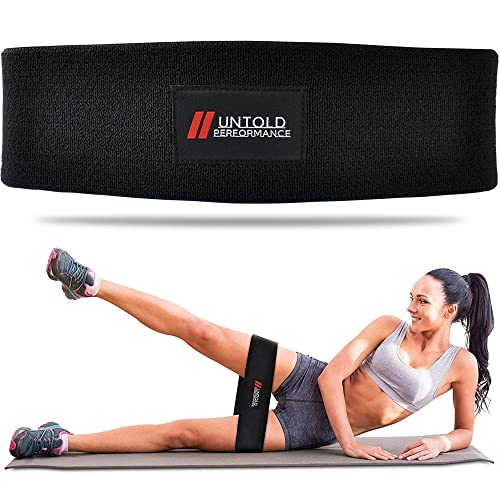
- ✓ Secure fit stays in place
- ✓ Durable and thick material
- ✓ Versatile for stretching & strength
- ✕ Slightly stiff initially
- ✕ Limited color options
| Material | Durable elastic fabric with smooth, non-slip surface |
| Dimensions | 14 inches (length) x 3.25 inches (width) |
| Resistance Level | Variable, suitable for all fitness levels |
| Targeted Muscle Groups | Glutes, hips, thighs |
| Design Features | Secure fit, non-slip, comfortable during workouts |
| Intended Use | Strength training, flexibility, mobility exercises |
You know that frustrating moment when your resistance band slips down just as you’re hitting your stride? That never happened with this Untold Performance Heavy Resistance Hip Band.
Its smooth, snug fit stayed perfectly in place, even during those intense leg lifts and glute squeezes.
The 14-inch length and 3.25-inch width strike a great balance. It’s long enough to accommodate different body sizes but firm enough to provide steady resistance.
I found it especially useful for hip mobility drills and lower body strength exercises. The band’s material feels thick and durable, so I wasn’t worried about it snapping or losing elasticity after multiple uses.
What surprised me was how comfortable it was to wear for extended sessions. No pinching or chafing, which is common with thinner bands.
It also helped activate targeted muscles more effectively—my glutes and thighs felt the burn in a good way. Plus, it’s versatile enough for both stretching and strength training.
For anyone tired of bands that roll up or lose tension quickly, this one delivers consistent performance. It’s simple, doesn’t slide around, and adds the right amount of resistance to challenge your muscles.
Whether you’re a beginner or a seasoned athlete, this band can boost your workout in a straightforward way.
Overall, it’s a solid, budget-friendly choice that genuinely improves mobility and strength. It’s become a staple in my routine for quick, effective workouts at home or the gym.
Fit Simplify Resistance Loop Bands Set of 5

- ✓ Wide resistance range
- ✓ Compact and portable
- ✓ Good for rehab too
- ✕ Slightly limited length
- ✕ Not adjustable
| Material | Latex or natural rubber (high-quality, skin-friendly) |
| Dimensions | 12 inches in length and 2 inches in width |
| Resistance Levels | Extra Light, Light, Medium, Heavy, Extra Heavy |
| Number of Bands | 5 |
| Intended Use | Strength training, stretching, physical therapy, rehabilitation |
| Portability | Includes carry bag for easy transport |
It was a bit of a surprise to find that these resistance bands are actually 12 inches long, not the tiny loops I initially expected. I’ve used smaller ones before that felt too constrictive, but these give you just enough room to move comfortably.
The set’s variety of resistance levels really caught my attention. From the extra light for warm-ups to the extra heavy for more intense workouts, I could easily switch based on what I needed that day.
The color coding makes it super simple to grab the right one without second-guessing.
What I didn’t anticipate was how versatile these bands are. I used them for everything—leg exercises, arm pulls, even some gentle stretching.
The included guide is a nice touch, showing how to use each band for different muscle groups. Plus, the carry bag makes it easy to toss in my gym bag and take them anywhere.
They feel sturdy and gentle on my skin, which is a big plus. I appreciate that they’re designed to be safe and durable, so I don’t worry about snapping during a tough set.
The quality is solid, and I can see myself using these frequently for rehab or just regular workouts.
Overall, these bands exceed my expectations for their price. They’re simple, effective, and well-made.
Whether you’re a beginner or a seasoned athlete, I think you’ll find them pretty handy for all kinds of fitness routines.
FITNEZA 76″ Fabric Resistance Bands for Workout and Pilates

- ✓ Long, full-range motion
- ✓ Soft, skin-friendly fabric
- ✓ Portable, machine washable
- ✕ Slightly bulkier than rubber bands
- ✕ Might be too long for very targeted exercises
| Length | 76 inches (193 cm) |
| Material | Premium woven fabric |
| Resistance Type | Heavy, stable tension with smooth resistance |
| Intended Use | Workout, Pilates, mobility training, rehabilitation |
| Additional Features | Odor-resistant, machine washable, includes breathable mesh bag |
| Suitable For | Upper body, lower body, core exercises, stretching, assisted strength training |
Honestly, I didn’t expect a resistance band to feel like a sturdy piece of equipment that could double as a workout companion. The moment I unraveled the Fitneza 76-inch fabric band, I was surprised by how substantial and soft it felt in my hands.
It’s longer than typical bands, which instantly gave me more freedom for full-range movements.
The woven fabric is a game-changer. It provides heavy, stable tension without rolling or overstretching, making every pull feel controlled and safe.
I tried it for everything—from Pilates to mobility exercises—and it responded beautifully, giving just enough resistance without feeling aggressive.
What truly stood out is how gentle it is on the skin. Unlike rubber bands that can pinch or cause irritation, this one is soft and durable.
Plus, it’s odor-resistant and fully machine washable, so you can use it daily without worry. The breathable mesh bag makes it super easy to toss into your gym bag or take outdoors for a quick session.
Using it for post-injury rehab or muscle activation felt natural because of the controlled resistance. It’s versatile enough for stretching, assisted strength training, or even as a mobility aid.
Honestly, I’ve used shorter bands before, but this extra length really makes a difference in my range of motion and comfort.
Overall, if you’re looking for a reliable, multi-purpose resistance band that’s comfortable and portable, this one from Fitneza might just become your new favorite.
What Factors Should You Consider When Choosing Resistance Band Length?
When choosing the best length for a resistance band, several factors should be considered to ensure it meets your fitness needs and goals.
- User Height: The height of the user plays a crucial role in determining the appropriate resistance band length. Taller individuals may require longer bands to accommodate their range of motion during exercises, while shorter individuals may find shorter bands more effective and easier to manage.
- Exercise Type: Different exercises necessitate different band lengths. For instance, exercises targeting larger muscle groups, such as squats or deadlifts, may benefit from longer bands, whereas smaller muscle group exercises, like bicep curls or tricep extensions, can often be performed effectively with shorter bands.
- Stretch Factor: The degree of stretch you prefer also influences the length of the resistance band. If you prefer a significant amount of stretch during your workouts for increased resistance, longer bands may be appropriate, while those who prefer a more compact range of motion might opt for shorter bands.
- Portability: If you plan to take your resistance band on the go, consider how length affects portability. Shorter bands are generally easier to pack and carry, making them a practical choice for travel or outdoor workouts, while longer bands may require more space.
- Resistance Level: The resistance level of the band can also dictate the ideal length. Bands designed for higher resistance may benefit from being slightly longer to allow for a fuller range of motion, while lighter resistance bands can be effective at shorter lengths, accommodating quick exercises and movements.
How Do Different Lengths of Resistance Bands Affect Your Workouts?
The length of resistance bands can significantly influence the effectiveness and versatility of your workouts.
- Short Resistance Bands: Ideal for exercises targeting specific muscle groups, short bands allow for a high level of tension and control during movements.
- Medium Resistance Bands: These bands provide a balance between flexibility and resistance, making them suitable for a variety of exercises including full-body workouts.
- Long Resistance Bands: Best for compound movements and larger ranges of motion, long bands can accommodate a wider variety of exercises, allowing for more dynamic workouts.
- Adjustable Resistance Bands: Featuring a design that allows users to change the length, adjustable bands offer versatility and can cater to different exercises and fitness levels.
- Loop Bands: Typically shorter and thicker, loop bands are excellent for lower body workouts and can enhance stability and strength in exercises like squats and leg lifts.
Short resistance bands, typically around 12-18 inches, are great for focused workouts, allowing users to perform exercises with precision, particularly for upper body and rehabilitation activities. They provide a significant amount of resistance in a limited range of motion, which can be beneficial for building strength in specific areas.
Medium resistance bands, generally 24-36 inches, strike a balance between resistance and mobility, making them versatile for various workouts. These bands are excellent for full-body workouts as they can be used for both upper and lower body exercises, allowing for a good range of motion while still providing resistance.
Long resistance bands, usually 48 inches or longer, are perfect for exercises that require a greater range of motion, such as deadlifts or overhead presses. Their length makes them suitable for dynamic movements, accommodating exercises that involve multiple muscle groups and larger movements.
Adjustable resistance bands can be shortened or lengthened according to the user’s needs, providing flexibility in workouts. This feature allows users to switch between different exercises easily, making them ideal for circuit training and varied workout routines.
Loop bands, which are often used in physical therapy and strength training, provide a unique way to engage the lower body. They are particularly effective for activating glutes and legs, making them popular for squats, leg press variations, and other lower body workouts due to their ease of use and stability during exercises.
What Are the Benefits of Short Resistance Bands?
Short resistance bands offer a variety of benefits for fitness enthusiasts and can enhance workout routines effectively.
- Portability: Short resistance bands are lightweight and compact, making them easy to carry around for workouts anywhere.
- Versatility: These bands can be used for a wide range of exercises, targeting multiple muscle groups while allowing for modifications based on fitness levels.
- Increased Stability: Short bands provide more control during exercises, helping users maintain proper form and alignment throughout their workouts.
- Cost-Effective: Resistance bands are generally more affordable than many gym equipment alternatives, providing an efficient workout tool without a significant investment.
- Progressive Resistance: Short resistance bands come in various thicknesses, allowing users to progressively increase resistance as they gain strength and fitness.
Portability is a significant advantage of short resistance bands; their lightweight and compact nature means they can be easily stored in a bag or drawer, making them ideal for workouts at home, in the park, or while traveling.
Versatility is another key benefit, as short resistance bands can be utilized in numerous exercises such as squats, rows, and lateral raises, accommodating a range of fitness levels from beginners to advanced users.
The increased stability offered by short bands allows for better control during exercises, which is essential in maintaining proper form, thereby reducing the risk of injury and improving workout effectiveness.
Cost-effectiveness is an important factor; short resistance bands are typically less expensive than bulky gym equipment, allowing individuals to incorporate strength training into their routines without incurring high costs.
Progressive resistance is facilitated by the variety of thicknesses available in short bands, enabling users to gradually increase the challenge as they build strength, which is essential for continuous improvement in fitness levels.
What Advantages Do Longer Resistance Bands Provide?
Longer resistance bands offer several advantages for workouts and rehabilitation.
- Increased Range of Motion: Longer resistance bands allow for a greater range of motion, which can enhance flexibility and mobility during exercises. This expanded reach enables users to perform a variety of movements that may be limited with shorter bands.
- Versatility in Exercises: With a longer band, users can engage in a wider array of exercises targeting different muscle groups. This versatility allows for creative workouts, from upper body to lower body and even full-body routines, without needing multiple bands.
- Adjustable Resistance Levels: Longer bands can be folded or doubled over to adjust the resistance level, providing users with customizable intensity for their workouts. This feature makes them suitable for users at different fitness levels, from beginners to advanced athletes.
- Better Stability and Control: Longer bands often provide better stability during exercises as they create a more balanced tension across the body. This stability can improve control over movements, thereby reducing the risk of injury and enhancing workout effectiveness.
- Improved Rehabilitation Options: For rehabilitation purposes, longer resistance bands can accommodate a wider range of therapeutic exercises. They are beneficial for physical therapy patients who need to gradually increase resistance while maintaining proper form during their recovery process.
What Length of Resistance Band is Ideal for Beginners?
The ideal length of a resistance band for beginners can vary based on personal preference and the types of exercises planned.
- 5 to 6 Feet: A band length of 5 to 6 feet is typically recommended for beginners as it provides enough length for a variety of exercises while maintaining adequate tension.
- Longer Bands (7 to 10 Feet): Bands that are 7 to 10 feet long offer greater versatility for exercises that require more space and can be beneficial for taller individuals.
- Shorter Bands (3 to 4 Feet): Shorter bands are suitable for targeted exercises where less length is needed, making them ideal for focused workouts on specific muscle groups.
The 5 to 6 feet bands are popular among beginners because they allow for a wide range of movements, such as squats, chest presses, and rows, without overstretching. This length can also accommodate different heights, making it a practical choice for most users.
Longer bands, measuring 7 to 10 feet, are advantageous for exercises that require more range and can help with full-body workouts, especially for those who are taller or want to engage in dynamic movements. They can also be useful for pairing with anchor points for added resistance in various exercises.
Shorter bands, around 3 to 4 feet, are perfect for isolation exercises where precision is key, such as bicep curls and tricep extensions. They can be advantageous for those who prefer a more controlled workout or have limited space, as they are easier to manage and store.
What Length Should Experienced Athletes Opt For?
The optimal length for resistance bands can vary based on the experience level of the athlete and the types of exercises they intend to perform.
- Short Bands (4-5 feet): Ideal for athletes focusing on upper body workouts, short bands provide sufficient tension for exercises like bicep curls and tricep extensions. They are also easier to control and manipulate for isolation movements.
- Medium Bands (6-8 feet): These bands offer a balance, making them suitable for a variety of movements, including both upper and lower body exercises. Experienced athletes can utilize medium bands for compound movements, allowing for greater resistance without sacrificing control.
- Long Bands (9-12 feet): Long bands are perfect for full-body workouts and can be anchored for more versatile workouts. Experienced athletes can use them for exercises requiring a larger range of motion, such as squats and deadlifts, while also allowing for multi-directional resistance.
How Does Resistance Band Length Impact Specific Exercises?
The length of a resistance band can significantly influence the effectiveness and comfort of various exercises.
- Short Bands: Shorter resistance bands are ideal for exercises that target smaller muscle groups, such as bicep curls or tricep extensions. They provide a higher level of tension from the start, which can enhance muscle engagement but may limit range of motion for larger movements.
- Medium Bands: Medium-length bands offer a balance between tension and range of motion, making them suitable for a variety of exercises, including squats and rows. They allow for a wider range of motion while still providing adequate resistance, making them versatile for both beginners and experienced users.
- Long Bands: Longer resistance bands are beneficial for full-body exercises and movements that require a larger range of motion, such as deadlifts and overhead presses. They enable users to adjust the band’s position to increase or decrease resistance and are particularly useful for stretching and mobility work.
- Adjustable Bands: Some resistance bands come with adjustable lengths, allowing users to customize the band according to the specific exercise. This flexibility ensures optimal resistance and comfort, accommodating different body types and fitness levels, which can enhance the overall effectiveness of workouts.
- Loop Bands vs. Straight Bands: Loop bands, which are circular in shape, are often shorter and can provide concentrated tension for lower body exercises, while straight bands can be longer and are typically used for upper body workouts. The choice between the two types can affect the distribution of resistance throughout the movement, impacting how exercises are performed.
What Length is Best for Upper Body Exercises?
The best length for resistance bands can vary based on the type of exercise and the user’s height and strength level.
- Standard Length (around 4-5 feet): This is the most common length, suitable for a wide range of exercises targeting major muscle groups.
- Longer Bands (6-8 feet): Ideal for exercises requiring more stretch or for taller individuals, allowing for greater range of motion.
- Shorter Bands (2-3 feet): Best for focused movements and rehabilitation exercises, providing higher resistance over shorter distances.
- Adjustable Bands: These bands come with attachments that allow users to modify the length, making them versatile for different exercises and users.
The standard length of around 4-5 feet is versatile and works well for most upper body exercises, such as rows and chest presses, allowing for effective resistance while maintaining control.
Longer bands, measuring 6-8 feet, are particularly beneficial for taller users or for exercises that require a greater stretch, such as overhead presses or lat pulldowns, enhancing the workout’s effectiveness.
Shorter bands, typically 2-3 feet, are often used for targeted exercises, like bicep curls or tricep extensions, where a more intense resistance can be applied without needing a long band length.
Adjustable bands offer flexibility, as they can be modified to fit various exercises and user preferences, making them an excellent choice for multi-purpose training and accommodating different body sizes.
What Length is Best for Lower Body Exercises?
The best length for a resistance band largely depends on the specific lower body exercises being performed and the user’s height.
- 4 Feet: Ideal for individuals under 5’5″, this length provides adequate resistance for exercises like squats and leg extensions without excessive slack.
- 5 Feet: Suitable for those between 5’5″ and 6’0″, offering a balanced range for a variety of exercises while maintaining tension throughout the movement.
- 6 Feet: Best for individuals over 6’0″, allowing for greater stretch and versatility in lower body workouts, including lunges and hip abductions.
- Adjustable Bands: These bands can change length, making them versatile for different exercises and accommodating various user heights, ensuring optimal resistance and comfort.
4-foot bands work well for shorter users, allowing for effective resistance without being cumbersome. They are particularly beneficial for exercises focused on building muscle strength in the lower body, such as glute bridges or calf raises.
5-foot bands cater to a larger demographic, providing enough length for a comprehensive workout while still being manageable. This length is versatile enough for engaging in a variety of exercises, ensuring users can target multiple muscle groups effectively.
For taller individuals, 6-foot bands are essential as they prevent the band from feeling too tight or restrictive during workouts. This length is especially useful for exercises requiring a wider stance or deeper squats, ensuring proper form and maximizing effectiveness.
Adjustable bands are a practical option for those who wish to have a single band that can cater to various exercises and user heights. This flexibility allows for a customized workout experience, ensuring that users can adapt the resistance as needed for different exercises.
How Can You Determine Your Optimal Resistance Band Length for Home Workouts?
Determining the optimal resistance band length for home workouts involves considering several factors that influence effectiveness and comfort.
- Height: Your height plays a significant role in selecting the best length for a resistance band. Taller individuals may require longer bands to perform exercises effectively without straining or compromising form.
- Type of Exercise: Different exercises may require varying lengths of resistance bands. For instance, exercises that target the lower body, such as squats or lunges, may benefit from longer bands, while upper body workouts can often be performed with shorter bands.
- Resistance Levels: The resistance level of the band can also influence the required length. Bands with higher resistance may need to be shorter to allow for effective tension during exercises, whereas lower resistance bands can be longer, giving you more range of motion.
- Anchor Points: Where you plan to anchor your resistance band can impact the length you need. If you are using a door anchor or other stationary object, ensure the band is long enough to provide the desired tension when anchored correctly.
- Personal Preference: Comfort and personal preference are essential when determining band length. Some individuals may feel more comfortable with a shorter band for stability, while others may prefer a longer band for a greater range of motion during workouts.